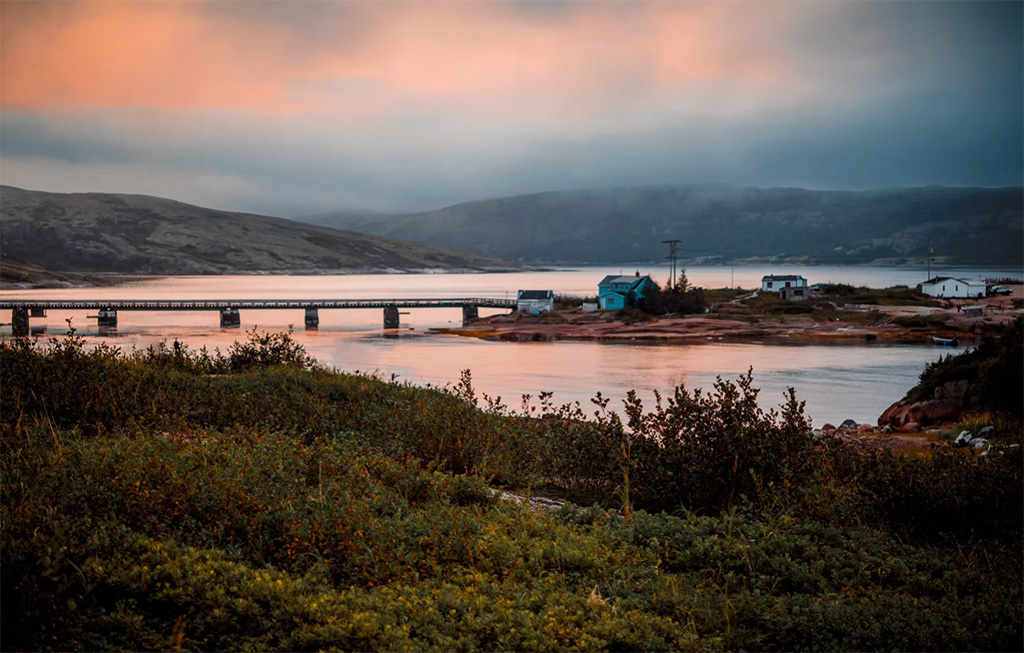
The community of Baie des Moutons, known today by its official name Mutton Bay, is located on the shores of the Gulf of St. Lawrence within the municipality of Gros Mécatina.
mention
settlers arrive
made official
The settlement is centered around Portage Harbor, a sheltered inlet accessible via Mutton Bay, making it an ideal location for boating and fishing for centuries.
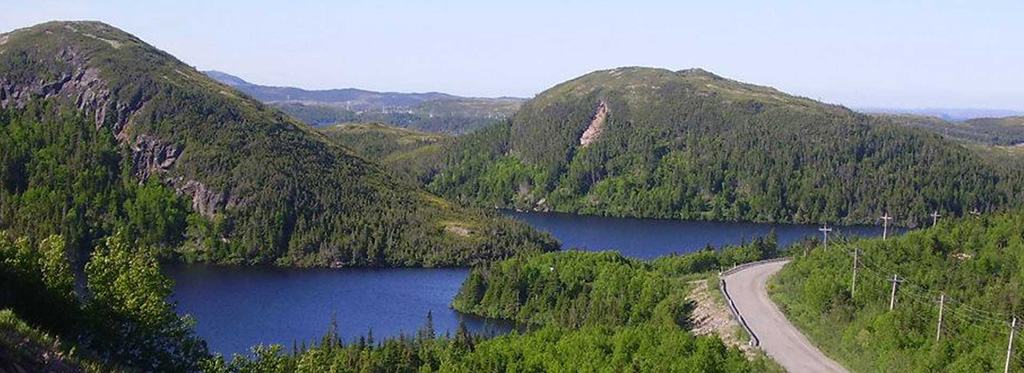
The place name Baie des Moutons first appeared in the early 1800s. Several hypotheses explain its origin: on the one hand, the word "moutons" sometimes refers to the white foam formed by the waves, an image frequently used in the 19th century; on the other hand, the rounded hills surrounding the bay evoke the shape of "humpbacked" sheep. Some local traditions also recount that foreign crews briefly unloaded sheep to graze them, but there is no evidence to support this version. As early as 1804, notarized documents mention Baie-Moutons, followed by other variants such as Baie-Mouton or Baie-des-Moutons. The English form Mutton Bay, increasingly used by English-speaking residents, was officially adopted in 1983.
The area has been inhabited since the French Regime, a period during which it was first known as Baie du Portage, in reference to an ancient Indigenous portage located nearby. It served at that time as a trading post and a stopover for fishing boats operating along the Lower North Shore. Placide Vigneau's journal, dated 1863, confirms the presence of fishing vessels in the area.
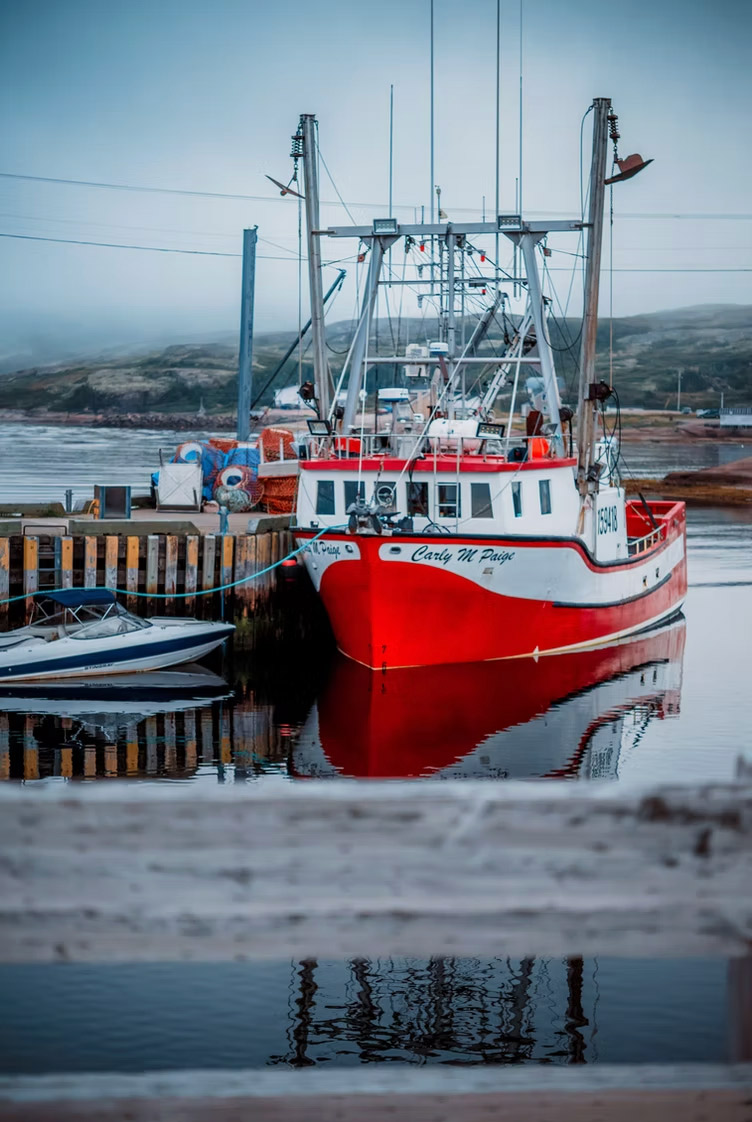
However, it was primarily settlers from Newfoundland, who arrived in the 1870s, who laid the foundations for the modern village. They devoted themselves to fishing for lobster, scallops, and other marine resources—activities that still shape the local economy today.
English-speaking families such as the Buffitts, Rogers, Greens, and Bobbitts became a prominent presence in the region, as evidenced by the two historic cemeteries located on Mitchell Island, where several generations of Mutton Bay residents were laid to rest.
Today, Mutton Bay remains a picturesque fishing village, surrounded by forested mountains and numerous islands. The traditional wooden architecture, small Anglican churches dating back to the 1920s, and the former seal-blubber processing sites bear witness to a maritime past that is still visible in the landscape. The area, still isolated and deeply rooted in the English-speaking coastal culture, continues to uphold a strong and unique identity on the Lower North Shore.
Mutton Bay, Basse-Côte-Nord · Coastal Legacies
La communauté de Baie des Moutons, connue aujourd'hui sous son nom officiel Mutton Bay, occupe les rives du golfe du Saint-Laurent au sein de la municipalité de Gros Mécatina.
notariée
terre-neuviens
officialisé
Son implantation s'organise autour du havre Portage, une ouverture protégée accessible par la baie des Moutons, ce qui en fait un lieu propice à la navigation et à la pêche depuis des siècles.
Le toponyme Baie des Moutons apparaît dès le début des années 1800. Plusieurs hypothèses expliquent son origine : d'une part, le mot moutons désigne parfois l'écume blanche formée par les vagues, une image fréquemment utilisée au 19e siècle ; d'autre part, les collines arrondies qui entourent la baie évoquent la forme de moutons « moutonnés ». Certaines traditions locales rapportent aussi que des équipages étrangers auraient brièvement débarqué des moutons pour les faire paître, mais rien ne confirme cette version. Dès 1804, des documents notariés mentionnent Baie-Moutons, puis d'autres variantes comme Baie-Mouton ou Baie des Moutons. La forme anglaise Mutton Bay, de plus en plus employée par les résidents anglophones, est officialisée en 1983.
Le territoire est fréquenté depuis le Régime français, période durant laquelle il porte d'abord le nom Baie du Portage, en référence à un ancien portage autochtone situé dans les environs. Il sert alors de lieu de traite et de relâche pour les bateaux de pêche opérant sur la Basse-Côte-Nord. Le journal de Placide Vigneau, en 1863, confirme la présence installée de bâtiments de pêche. Toutefois, ce sont surtout des colons de Terre-Neuve, arrivés dans les années 1870, qui posent les premières bases du village moderne. Ils se consacrent à la pêche au homard, au pétoncle et aux autres ressources marines, activités qui façonnent encore la vie économique locale.
Les familles anglophones telles que les Buffitt, Rogers, Green et Bobbitt deviennent très présentes dans la région, comme en témoignent les deux anciens cimetières historiques situés sur l'île Mitchell, où plusieurs générations de résidents de Mutton Bay ont été inhumées.
Aujourd'hui, Mutton Bay demeure un village de pêche pittoresque, entouré de montagnes boisées et de multiples îles. L'architecture traditionnelle en bois, de petites églises anglicanes datant des années 1920 et les anciens sites de fonderies de loup marin témoignent d'un passé maritime toujours visible dans le paysage. L'endroit, encore isolé et profondément enraciné dans la culture côtière anglophone, continue de perpétuer une identité forte et unique sur la Basse-Côte-Nord.
Mutton Bay, Basse-Côte-Nord · Coastal Legacies