The history of the area dates back well before the establishment of the modern village.
13 October
hospital opens
today
During his second voyage in 1535, Jacques Cartier named the islands in the area "Ysles saincte Martre," while a 20th-century toponymic survey reveals that the Innu used the term Akumunan or Akunan, meaning "good port" or "good harbor," to refer to this area. However, the place name Harrington is believed to have appeared before 1840 and may have been named in honor of Count Charles Stanhope of Harrington, or it may have been introduced by Governor Aylmer following a visit to the region in 1831.
Harrington Island is also at the center of a striking legend: that of Marguerite de la Roque, abandoned on a neighboring island in the 16th century by her uncle, Roberval, after falling in love with a crew member. According to oral tradition, Harrington Harbour may be one of the locations in this story.
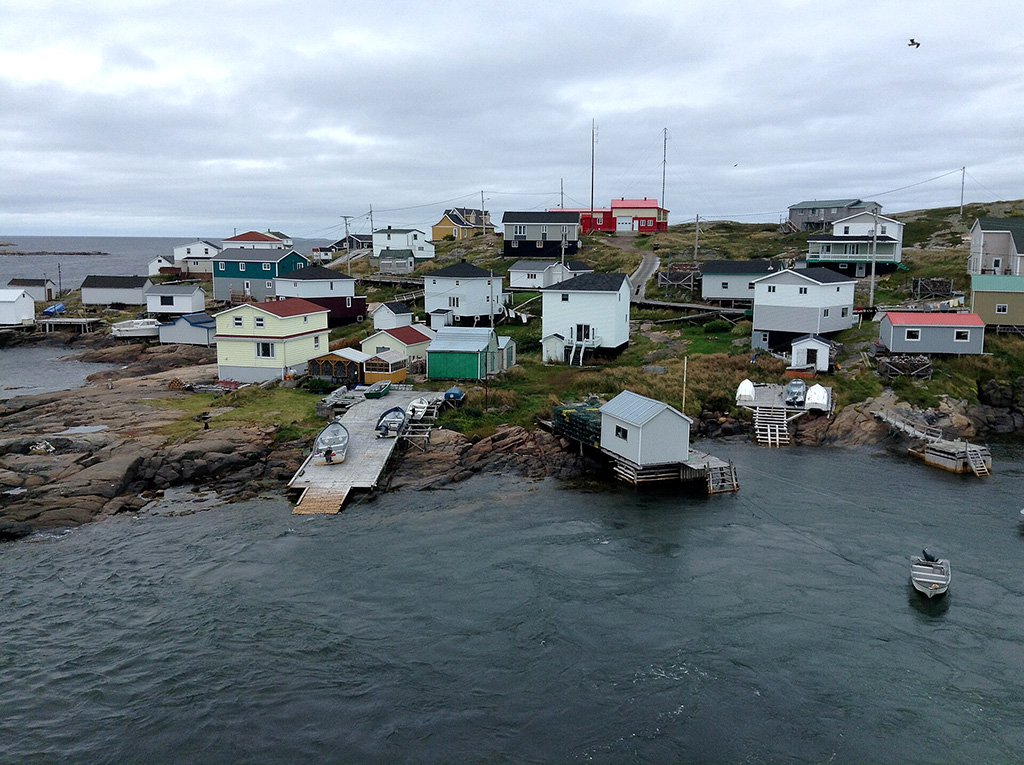
Harrington Harbour was officially founded on October 13, 1871, by Protestant fishermen from Newfoundland seeking to exploit the area's rich stocks of cod, wolffish, and crab. These families built colorful houses on the island's rocks and developed a seasonal economy centered on fishing. The very structure of the village stems from its environment; with no roads possible on the smooth rocks, residents built a network of wooden walkways connecting the homes and forming a unique transportation system, still in use today.
A post office opened in 1890 under the name of Harrington, and was renamed Harrington Harbour in 1897. That same year, Father Huard described the village as a community situated in a beautiful location, at the head of a good harbor where even ships of considerable tonnage could enter easily. The population at that time consisted of 27 fishing families from Newfoundland. Everyone was Protestant except for a single individual, either Canadian or Acadian, who represented Catholicism in the community.
At the end of the 19th century, the history of Harrington Harbour took on a humanitarian dimension when it became part of the medical mission network of Dr. Wilfred Thomason Grenfell, an English physician funded by British charities. As early as 1892, he visited the village aboard a hospital ship. In 1907, Grenfell founded a permanent hospital on the island, the only hospital in the entire coastal region. Harrington Harbour was then nicknamed "Hospital Island" and became a hub for healthcare on the Lower North Shore. Around 1895, the village also welcomed an Anglican church and a school, confirming its role as a regional centre.
Since its founding, the village's economy has been based on commercial fishing (cod, halibut, lobster, crab), seafood processing, and seasonal activities related to the migration of crabs and lobsters. Today, a seafood cooperative, the Coopérative communautaire de la Basse-Côte-Nord, contributes to the village's economic vitality.
Harrington Harbour has also gained notoriety thanks to the filming of the movie La grande séduction, which helped showcase its unique landscape of wooden sidewalks and colorful houses. With a complete absence of roads and the presence of wooden paths fostering sustainable mobility, pedestrians, bicycles, and mountain bikes are the preferred modes of transportation, reinforcing the village's unique character.
Today, Harrington Harbour remains a predominantly English-speaking community, descended from Newfoundland families who settled between 1871 and 1888. The population hovers around 300 residents.
This English-speaking community, which is in the minority in Quebec, is recognized by the federal government as an "official language minority community." Visitors can learn about the village's history at the Rowsell House Interpretation Centre, located in one of the village's oldest homes. The centre showcases the story of Dr. Grenfell, the evolution of local maritime life, traditional artifacts, and valuable archives. You can also see the Jacques Cartier Monument, which commemorates the navigator's visit in 1535. Harrington Harbour is now recognized as one of the thirty most beautiful villages in Quebec, both for its picturesque atmosphere and for its history deeply rooted in the sea.
Harrington Harbour, Basse-Côte-Nord · Coastal Legacies
L'histoire du territoire remonte bien avant l'établissement du village moderne.
le 13 octobre
de Grenfell
aujourd'hui
Lors de son second voyage en 1535, Jacques Cartier nomme les îles du secteur « Ysles saincte Martre », alors qu'une enquête toponymique du XXe siècle révèle que les Innus utilisaient le terme Akumunan ou Akunan, signifiant « bon port » ou « bon havre », pour désigner cette zone. Toutefois, le toponyme Harrington serait apparu avant 1840 et rendrait hommage au comte Charles Stanhope de Harrington, ou pourrait avoir été introduit par le gouverneur Aylmer après une visite de la région en 1831.
L'île Harrington est également au centre d'une légende marquante : celle de Marguerite de la Roque, abandonnée sur une île voisine au 16e siècle par son oncle, Roberval, après être tombée amoureuse d'un membre d'équipage. Selon la tradition orale, Harrington Harbour pourrait être l'un des lieux de ce récit.
Harrington Harbour est officiellement fondé le 13 octobre 1871 par des pêcheurs protestants de Terre-Neuve cherchant à exploiter les riches stocks de morue, de loup marin et de crabes du secteur. Ces familles installent des maisons colorées sur les rochers de l'île et développent une économie saisonnière axée sur la pêche. La structure même du village découle de son environnement, sans routes possibles sur les roches lisses, les résidents construisent un réseau de trottoirs de bois reliant les habitations et formant un système de circulation unique, toujours utilisé aujourd'hui.
Un bureau de poste est ouvert en 1890 sous le nom de Harrington, puis renommé Harrington Harbour en 1897. Cette même année, l'Abbé Huard décrivait le village comme une communauté qui occupe une belle position, au fond d'un bon havre où les vaisseaux même d'un assez fort tonnage peuvent entrer facilement. La population de cette époque se compose de 27 familles de pêcheurs venus de Terre-Neuve. Tout ce monde est protestant sauf pour un seul individu, Canadien ou Acadien, qui représente en ce lieu le catholicisme.
À la fin du 19e siècle, l'histoire de Harrington Harbour prend une dimension humanitaire lorsqu'elle est intégrée au réseau de la mission médicale du Dr Wilfred Thomason Grenfell, un médecin anglais subventionné par des œuvres caritatives britanniques. Dès 1892, il visite le village à bord d'un bateau-hôpital. En 1907, Grenfell fonde un hôpital permanent sur l'île, seul centre hospitalier de toute la région côtière. Harrington Harbour porte alors le surnom d'« Hospital Island », et devient un point névralgique de soins pour la Basse-Côte-Nord. Le village accueille également, vers 1895, une église anglicane et une école, confirmant son rôle de centre régional.
Depuis sa fondation, son économie repose sur la pêche commerciale (morue, flétan, homard, crabe), la transformation des produits de la mer et les activités saisonnières liées à la migration du crabe et du homard. Aujourd'hui, une coopérative de fruits de mer, la Coopérative communautaire de la Basse-Côte-Nord, participe à la vitalité économique du village.
Harrington Harbour a par ailleurs gagné en notoriété grâce au tournage du film La grande séduction, qui a contribué à faire découvrir son paysage singulier de trottoirs en bois et de maisons colorées. Absence totale de routes, présence de sentiers de bois façonnant une mobilité douce : piétons, vélos et VTT sont les moyens de transport privilégiés, renforçant le caractère unique du village.
Aujourd'hui, Harrington Harbour demeure une communauté majoritairement anglophone, issue de familles terreneuviennes établies entre 1871 et 1888. La population oscille autour de 300 habitants.
Cette identité anglophone, en minorité au Québec, est reconnue par le gouvernement fédéral dans le cadre des « communautés de langue officielle en situation minoritaire ». On peut apprendre un peu de l'histoire du village au Centre d'interprétation de la maison Rowsell dans l'une des plus anciennes maisons du village, elle présente l'histoire du Dr Grenfell, l'évolution de la vie maritime locale et des objets traditionnels et des archives précieuses. On peut aussi voir le Monument Jacques Cartier qui rappelle le passage du navigateur en 1535. Harrington Harbour est aujourd'hui reconnu comme l'un des trente plus beaux villages du Québec, tant pour son atmosphère pittoresque que pour son histoire profondément liée à la mer.
Harrington Harbour, Basse-Côte-Nord · Coastal Legacies